
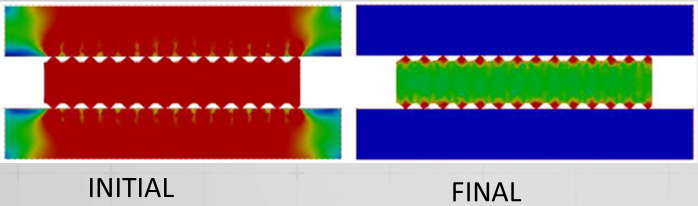
Left: initialRight: final
Kammprofile
0MPa
No residual contact stress modeled

A better design.
A better seal.
Higher recovery.
Designed for the lifecycle of the connection, not just the initial seal.
Your joint heats and cools under varying operating conditions.
TEADIT® 907 HRG is engineered to recover as flange loads vary, helping maintain consistent sealing contact.
Ideal For heat exchanger manufacturers and plant teams evaluating demanding gasketed joints.
01 The problem
Heat exchangers and other cycling equipment do not remain static. Temperature changes can create expansion, contraction, and flange movement, reducing gasket stress and increasing the risk of leakage.
Model / Section through flanged joint / movement exaggerated
Start-up or a process swing heats the shell and flanges.
Parts can grow at different rates, shifting the faces around the gasket.
Cooling can change the joint geometry and flange loads again.
The cycle repeats. Sealing has to hold through every pass
02 TEADIT® 907 HRG
TEADIT® 907 HRG is a high-recovery gasket with a wave-profile metallic core. Under bolt load, the core deflects and stores elastic energy. As load decreases, that stored energy allows the gasket to recover, helping maintain sealing contact.
See how recovery works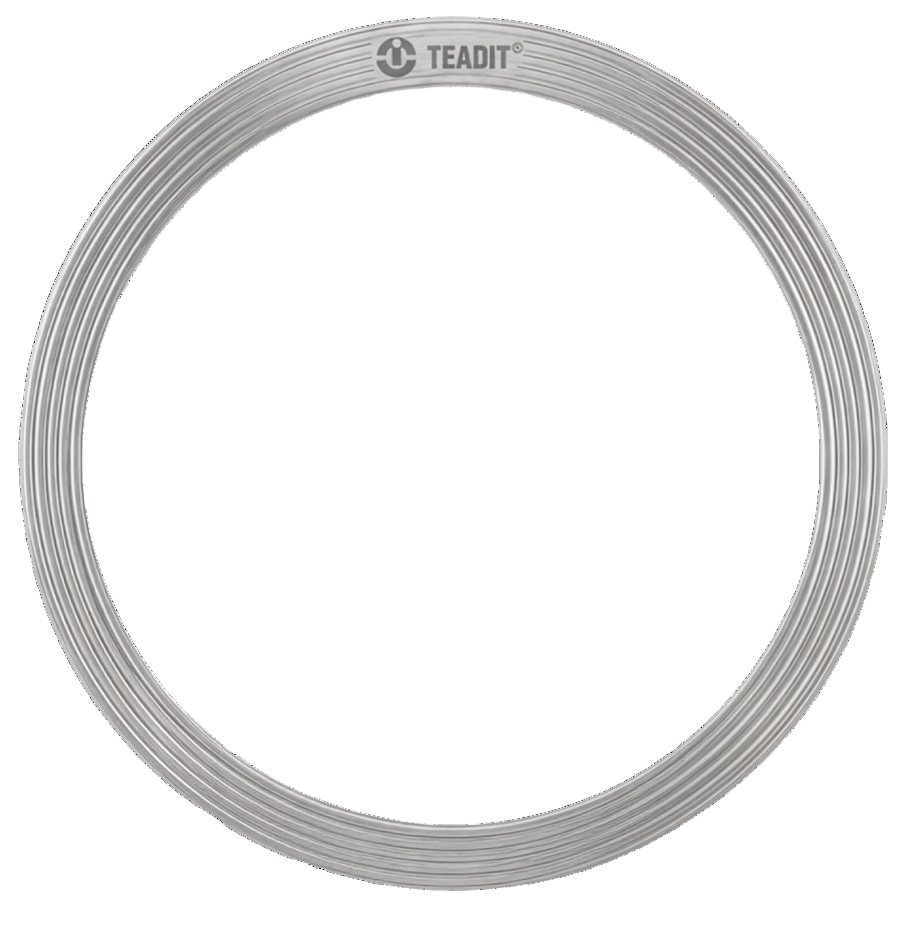
Product detail
See the metallic construction in the product photograph and section drawing.
03 How recovery works
Follow the gasket through two stages to understand how the TEADIT® 907 HRG high recovery gasket technology helps it respond to flange movement.
Explore the recovery and cycling process, including the test conditions and limitations. The illustration explains the mechanism; it is not a measured performance result or a guarantee of field service life.
Review the research and test conditionsElastic recovery of the wave-profile coreContinuous solid core with flat crests, flat troughs and straight sloping sides, based on the supplied trapezoidal profile. Deflection is exaggerated. This is not a dimensional drawing, deformation analysis, or measured performance result.
Phase 01 — Compressed stage
Bolt load deflects the metallic wave-profile core between the flange faces, storing elastic energy.
Both faces in contact
Qualitative states, not measured values.
04 Application fit
Consider the TEADIT® 907 HRG when varying joint load makes gasket recovery an important part of the sealing solution decision.
New equipment
Assess 907 HRG during new-equipment specification, alongside the joint design and intended operating cycle.
Installed equipment
Review 907 HRG for installed equipment where cycling, flange movement, or current gasket performance warrants further assessment.
Suitability depends on the joint geometry, service conditions, materials, and assembly. Application relevance does not establish drop-in compatibility; 907 HRG is not a universal drop-in replacement.
05 Configuration choices
Start with the 907 HRG sealing ring, then assess whether the joint requires a centering ring, an inner ring, or both. Ribs are available as required.
Size range: NPS 1/2 through 200+ inches.
Selected assembly
1 component
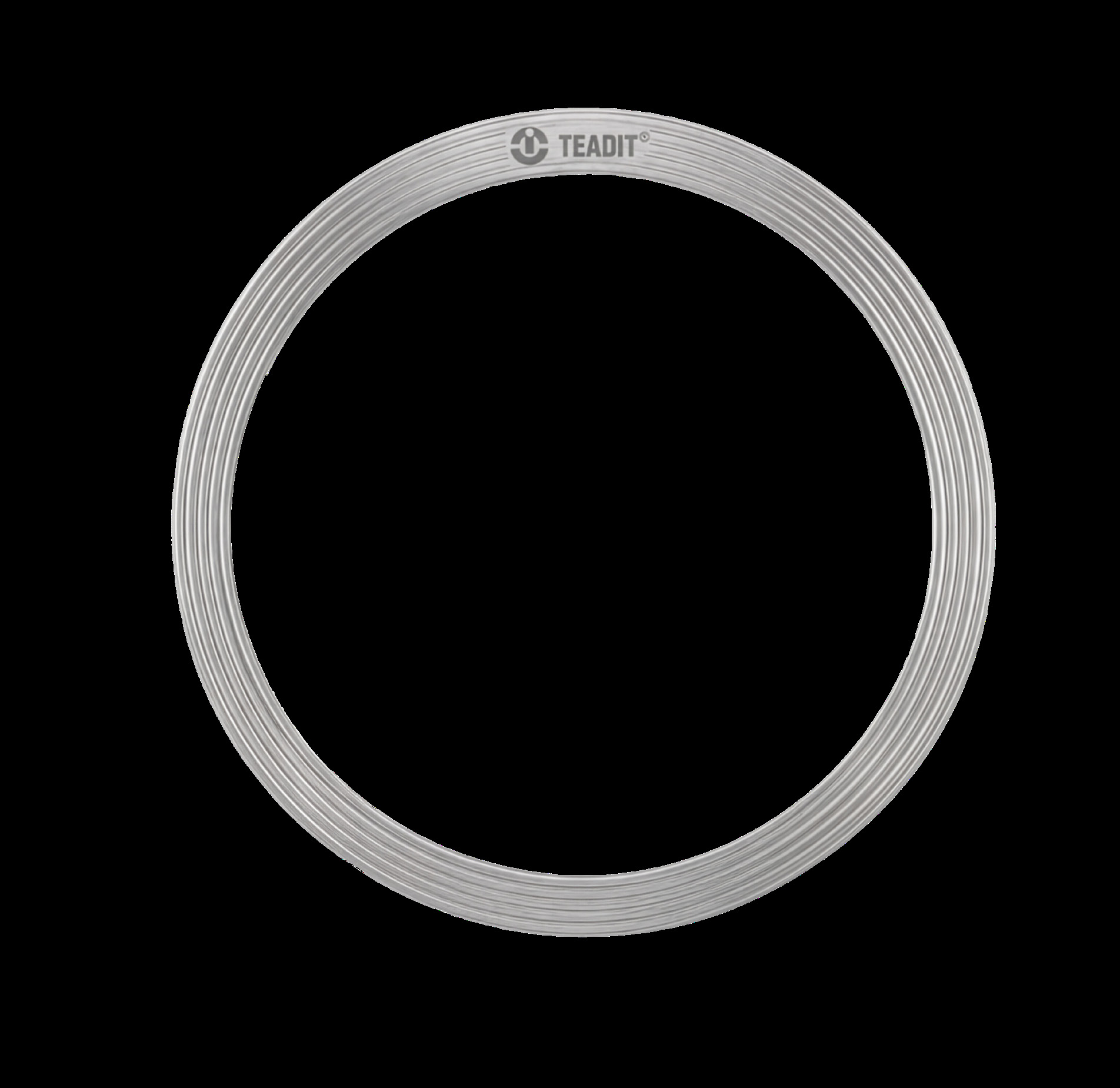
Real sealing-ring photograph with illustrated accessories. Centering and inner rings are illustrative—not photographed variants or manufacturing geometry. Confirm materials, dimensions and fit with TEADIT.
Included in this assembly
Choose a configuration
The sealing ring without optional centering or inner rings.
View selected assemblyThe metallic wave-profile ring, stamped TEADIT. It is the part you see in the photograph, and it is in every choice.
Sits outside the sealing ring and locates it in the joint. It can be loose-fit or integral.
Sits inside the sealing ring, on the bore side.
Centering rings can be loose-fit or integral. Confirm the required dimensions and configuration for your application.
Ribs are not depicted. Available upon request.

06Why talk to TEADIT?
Whether you are specifying a new heat exchanger or reviewing an installed joint, discuss the application—not just the gasket size.
Application discussion
Heat exchanger manufacturers and plant teams: discuss whether 907 HRG fits your joint and operating cycle.
Discuss your applicationTell us what you are sealing, the joint arrangement, and whether the requirement is for new or existing equipment.
Describe operating temperatures, pressure, startup and shutdown frequency, and any known flange movement.
Share the gasket dimensions, required configuration, current gasket, and sealing issues. Discuss with TEADIT whether 907 HRG is appropriate for the application.
How recovery helps Recovery primer
Thermal cycles, pressure swings and bolt relaxation can reduce compressive load on a gasket. A recovery gasket deflects under assembly stress and stores elastic energy. As flange load changes, that stored energy helps maintain the contact stress needed for sealing.
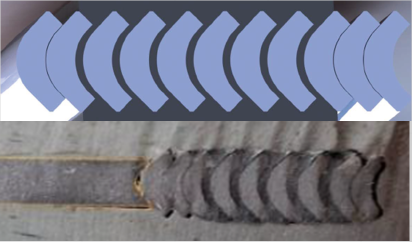
Recovery comes from a heavily wound spiral element that stores deflection in the winding itself.
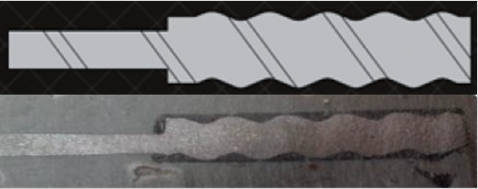
A solid metal core machined with a wave profile, so the core itself flexes and returns.
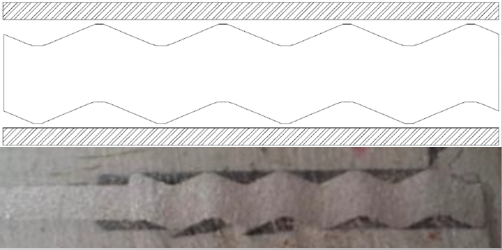
A solid core with a tuned wave profile, designed to retain sealing stress as load is lost.
Two concepts shown: spiral winding versus wave-profile solid core.
Competitor comparison / EN 13555
Look beyond the recovery label. This comparison asks how much gasket stress each tested design needs to reach the same helium leakage target—not how long it lasts in service.
Connecting the paper and supplied slides
Fig. 7 / Style 1
Competitor F
Fig. 8 / Style 2
TEADIT® 907 HRG
Fig. 9 / Style 3
Competitor L
Named-product mapping comes from the supplied TEADIT slides; the ASME paper itself labels Recovery Styles 1 to 3. Exact values come from the paper.
Leakage test / Separate from the thermal-cycle test
Ambient helium, 40 bar / paper-verified
At a leak target of 1E-4 mg/(m·s), 907 HRG needed 24.2 MPa of gasket stress, compared with 35.0 MPa for Competitor F and 54.3 MPa for Competitor L. Lower values mean less gasket stress was needed to reach the same leak target.
Competitor F
35.0MPa
Required gasket stress
TEADIT® 907 HRG
24.2MPa
Required gasket stress
Competitor L
54.3MPa
Required gasket stress
Results depend on the leak target. At the loosest listed target, 1E-1 mg/(m·s), Competitor F required 6.5 MPa versus 6.7 MPa for 907 HRG. This is not a claim of superiority at every target.
Average required gasket stress / MPa
Swipe the table to compare all three designs →
| Leak target mg/(m·s) | Competitor F | TEADIT® 907 HRG | Competitor L |
|---|---|---|---|
| 1E-1 | 6.5 | 6.7 | 7.0 |
| 1E-2 | 14.4 | 12.5 | 17.3 |
| 1E-3 | 23.1 | 17.3 | 30.3 |
| 1E-4 | 35.0 | 24.2 | 54.3 |
| 1E-5 | 122.0 | 36.8 | 77.1 |
| 1E-6 | not achieved | 70.1 | not achieved |
| 1E-7 | not achieved | 90.5 | not achieved |
Results depend on the leak target. At the loosest listed target, 1E-1 mg/(m·s), Competitor F required 6.5 MPa versus 6.7 MPa for 907 HRG.
Source: ASME PVP2026-180001, Table 1, p. 5, average of two Qmin tests. Product names from TEADIT slides (Figs. 7-9).
Read the paper
Performance Evaluation of Recovery-Type Gaskets Under Thermal Cycling Conditions
Girão, Roca, Meira and Norman. Proceedings of ASME PVP2026, PVP2026-180001.
Specimen mapping (Style 1: Competitor F; Style 2: TEADIT® 907 HRG; Style 3: Competitor L) comes from the supplied TEADIT slides; it is not stated in the ASME paper, which provides the exact values. Laboratory results do not guarantee field lifetime.
Choosing between high-recovery brands is one decision. Moving from a conventional gasket is another. This thermal-cycle test compares TEADIT® 907 HRG with spiral wound and Kammprofile specimens under the same conditions.
907 HRG maintained sealing through the full 24-cycle sequence. The result supports evaluating recovery for suitable cyclic-service joints—not replacing every conventional gasket.
24+ means no observed failure through the 24 tested cycles—not a measured service-life limit.
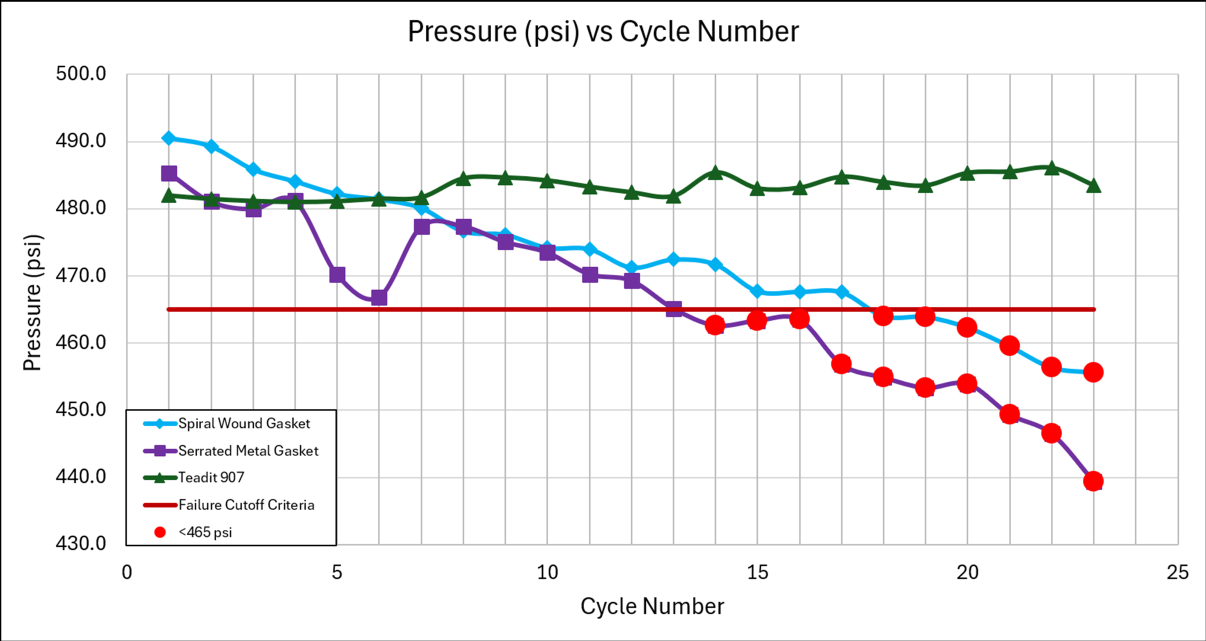
Combined pressure traces compare TEADIT® 907 HRG with the conventional baselines. The individual plots below show these three gasket designs.
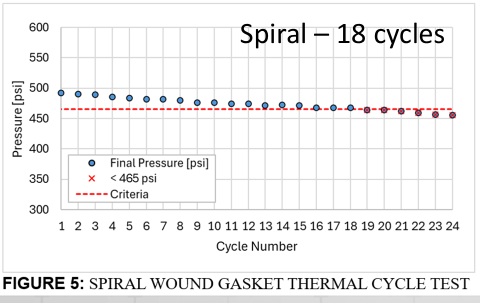
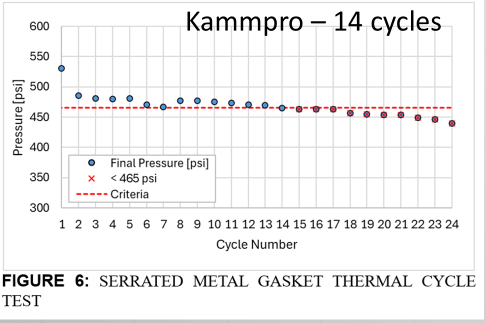
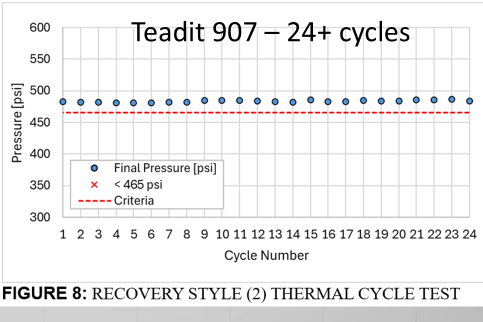
Modeled evidence Residual contact stress
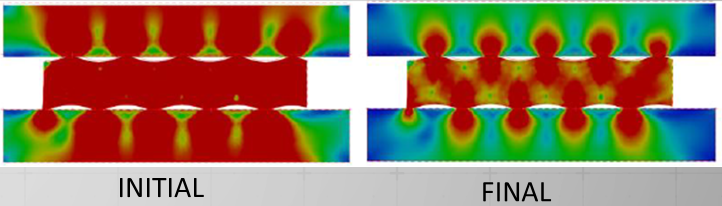
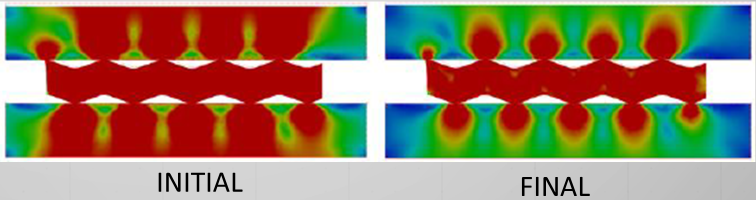
Finite element simulation: each gasket is loaded to 100 MPa (14,500 psi), then the model applies a prescribed flange movement. The figures below are residual contact stress from that model.
Left: initialRight: final
0MPa
No residual contact stress modeled
Left: initialRight: final
33.0MPa
4,786 psi residual
Left: initialRight: final
40.2MPa
5,831 psi residual
Test background / ASME PVP2026-180001
In plain language
Hot and cold flanges do not move together.
Heating and cooling make flanges and bolts expand and contract by different amounts, while the bolts and gasket can relax. Clamping stress on the gasket can fall, which can open a leak path. This is especially important during heat-exchanger start-up and shutdown.
Source: paper p. 1
Thermal-cycle test protocol
Source: paper p. 3, section 2.3
From evidence to application
Whether you are specifying a heat exchanger or reviewing a gasket replacement, the next step is the same: establish whether 907 HRG fits the application. Choose the conversation that matches your work.
Heat exchanger manufacturers
Evaluate TEADIT® 907 HRG for suitable gasketed flange connections during equipment design—not only after a sealing problem occurs.
Opens an email draft with an application checklist for the TEADIT team.
Plant, maintenance & reliability teams
Using spiral wound or Kammprofile gaskets? Start with joints exposed to thermal cycling, changing flange loads or recurring sealing concerns.
Opens an email draft with an application checklist for the TEADIT team.
Application review comes first. 907 HRG is not a universal drop-in replacement or a fit for every heat exchanger design. Suitability depends on the joint, service conditions, materials and assembly.
Engineering support Selection and qualification
Specifying a new heat exchanger and converting an installed joint are different decisions. Both need an application review to establish suitability, fit and qualification requirements.
Establish the fluid, pressure, temperature and operating cycle—not just the nominal conditions.
Confirm gasket fit, flange geometry and condition, material compatibility and available bolt load.
For new equipment, define validation requirements. For installed joints, review a suitable trial before broader conversion.
Review installation and bolting procedures. Recovery is not a substitute for correct joint assembly.
Correct bolting, flange condition and application-specific selection matter as much as gasket construction. Talk to an engineer about your joint.
FAQ Before you specify
A practical starting point for understanding 907 HRG and discussing your application.
Have a question about your specific joint?
Talk to TEADIT907 HRG is a high-recovery metallic gasket with a continuous solid wave-profile core. Its elastic recovery helps accommodate changes in flange-face separation and maintain sealing contact as joint load changes.
See how recovery works07 Contact TEADIT
Need to assess the application? Contact TEADIT with your equipment details, operating cycle, gasket size and configuration, and current sealing challenge.
Sales email: sales@teadit.com
The email button opens a draft in your email app. Nothing is sent until you send it.
Prefer a browser? Use our online contact form (opens in a new tab)Ready to prepare a quotation request?
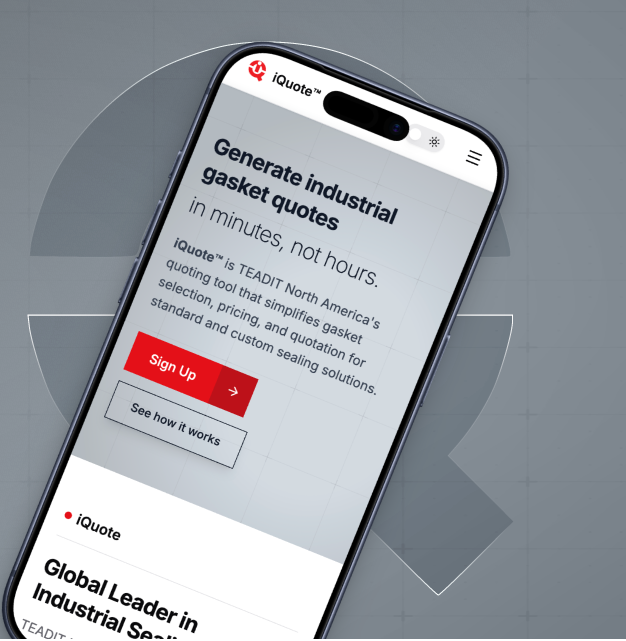
Use TEADIT iQuote™ to configure gasket requirements and support the quotation process for standard and custom sealing solutions.
About Teadit
Sealing for a safer and greener tomorrow
Since 1958, Teadit has been helping industry solve critical sealing challenges around the world.
With manufacturing operations around the globe, we combine technical expertise, reliable products, responsive support, and a customer-focused approach that makes us easy to do business with.
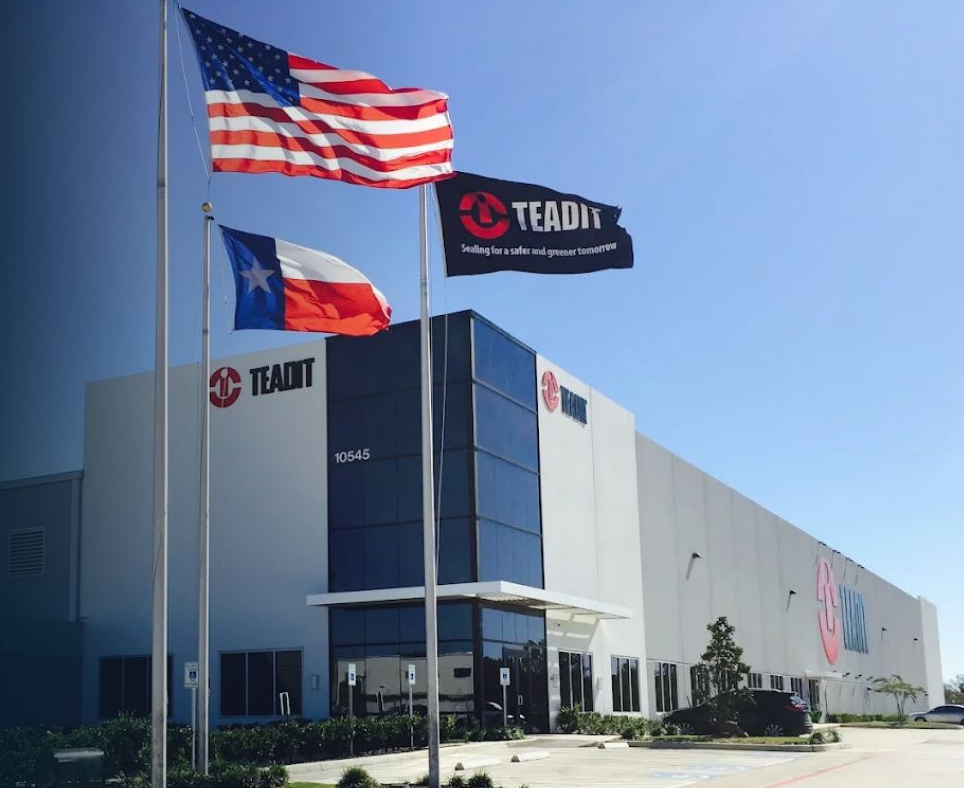
North America
Pasadena - TX
110,000
Sq ft facility
Manufacturing, warehousing and U.S. distribution.
Service & support
Around the clock
24/7
Support
Manufacturing, engineering and on site support.